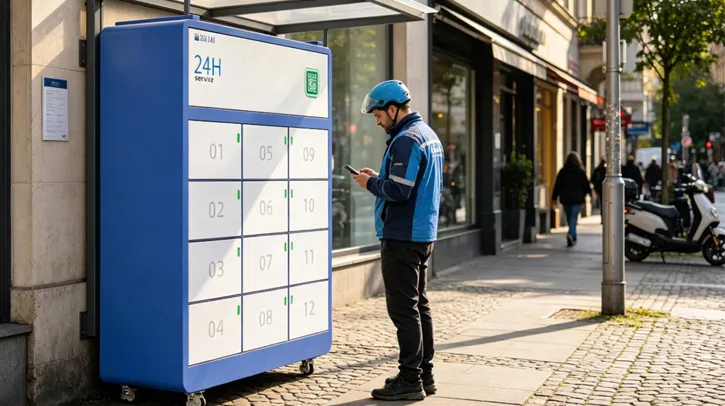
A hot meal vending machine is an automated food service system that stores packaged, pre-cooked meals, heats each order on demand, and dispenses it through a self-service pickup point. Customers choose a meal on the touchscreen, pay, and collect it after heating-without a staffed counter.
For food service operators, caterers, facility managers, and retail brands, this model can extend meal availability in places where a conventional kitchen or canteen may be impractical. Successful deployment still depends on the menu, packaging, replenishment plan, food-safety process, and site conditions.
How Does a Hot Meal Vending Machine Work?
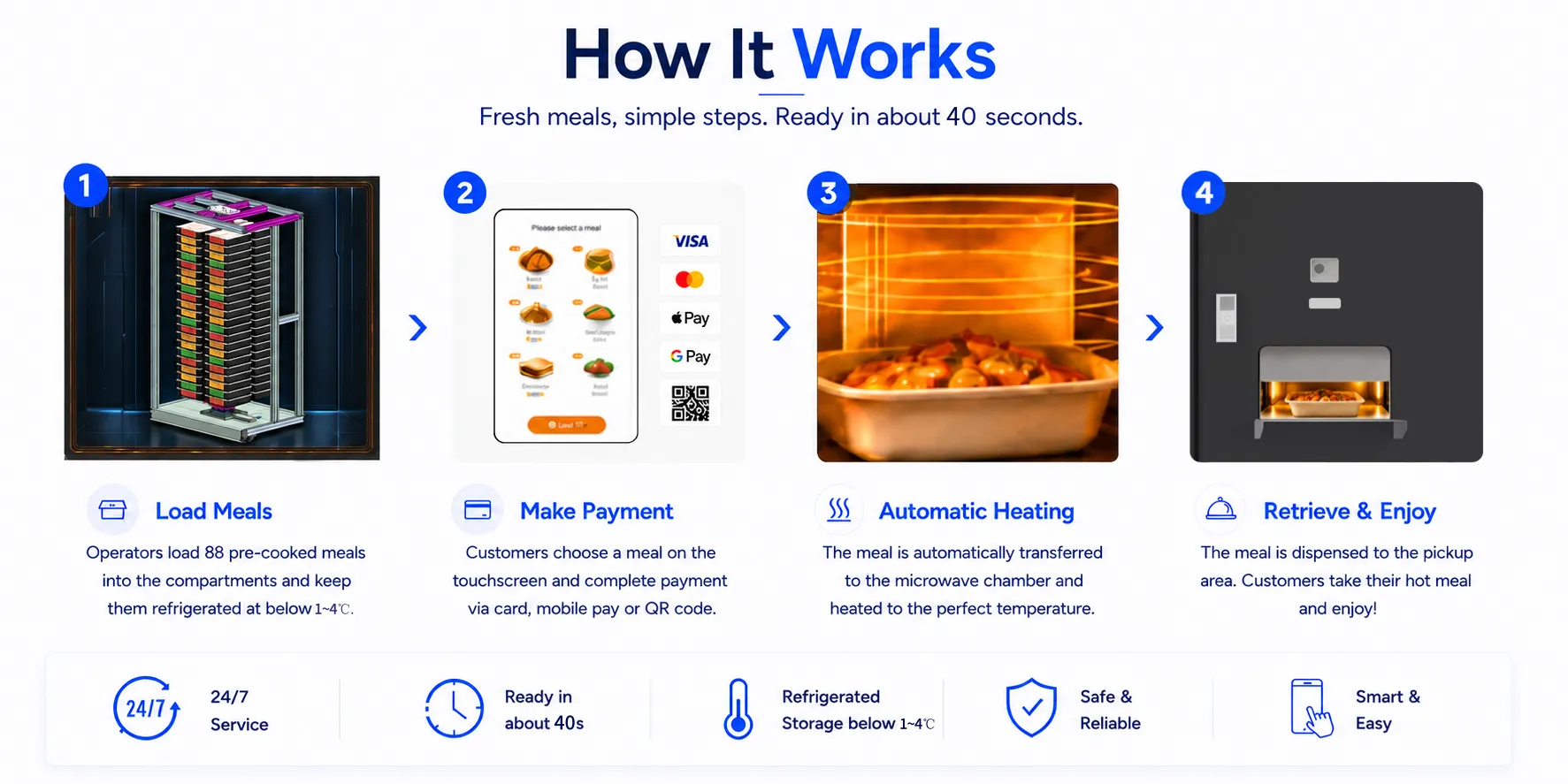
The process involves the following steps:
1. Select a meal on the touchscreen
2. Complete payment
3. The machine retrieves the packaged meal from refrigerated or frozen storage.
4. The meal is heated according to its configured program.
5. The customer collects it from the pickup area.
These hot meal vending machines are designed for packaged, pre-cooked meals, not raw ingredients. Suitable products may include rice meals, lunch boxes, pasta, noodles, pizza, burgers, and other microwave-compatible ready meals. And heating power and duration should be configured for each product. Portion size, ingredients, starting temperature, and packaging can all affect the results, so every menu item should be tested before launch.
Refrigerated or Frozen: Which Storage Option Best Fits?
The right storage method depends on the food supply chain, shelf-life plan, and replenishment frequency.
Option | Best suited to | ZHILAI configuration |
Refrigerated storage | Chilled meals with planned, frequent replenishment | Adjustable 1–4°C storage; |
Frozen storage | Operations requiring longer frozen holding and a different replenishment model | Adjustable –21 to –18°C |
Capacity varies with meal-box dimensions. Buyers should send package samples or exact measurements to the manufacturer before confirming a model.
Ideal Locations for Hot Food Vending Machines
A hot food vending machine is most useful where demand continues beyond staffed service hours or a full food outlet is difficult to operate.
Hospitals: for night-shift staff and visitors after cafeterias close
Factories: for multiple shifts and fixed break periods
Offices: for lunch and after-hours meals without a full canteen
Universities: for academic buildings, libraries, and student residences
Transport hubs: for passengers during early mornings, late nights, and service gaps
.webp "hot-meal-vending-machine-guide (2).png")
Benefits for commercial operators
Extended service hours
Automated ordering, payment, heating, and dispensing keep meals available without staffing a counter continuously.
Use space efficiently
A self-contained system requires less customer-facing space than a conventional serving counter.
Manage machines remotely
Cloud-based tools can help monitor sales, inventory, machine status, and replenishment needs.
Standardize on multiple sites
Shared interfaces, menu settings, and operating data support a more consistent service model.
.webp "hot-meal-vending-machine-guide (3).png")
What Should Buyers Check Before Purchasing?
Capacity and Packaging
Assess capacity using actual meal boxes, not just a headlined unit count. Packaging must fit the storage and delivery system, stay stable during dispensing, and suit the selected heating method.
Heating Performance
Ask whether heating settings can be adjusted for individual products. Test each meal for temperature consistency, package integrity, customer handling, and serving quality.
Payment Options
Confirm compatibility with the intended country, payment provider, and the POS hardware. ZHILAI configurations can support POS, Apple Pay, Google Pay, and QR-code payment, depending on selected hardware and local integration.
Customization and Support
Commercial projects may require custom cabinet graphics, interface languages, payment hardware, software functions, or system integration. Buyers should also confirm installation guidance, commissioning, warranty coverage, spare-parts support, software updates, and technical service.
Planning for a successful deployment
Before installation, define who will supply the meals, how often the machine will be replenished, and who will handle cleaning, stock rotation, alerts, and maintenance.
Start with a focused menu of well-tested products. Sales and inventory data can then show you which meals perform best. Assess potential sites by shift patterns, existing food options, peak demand, visibility, power access, and regular customers.Operators should also document procedures for loading, temperature checks, expiry management, allergen information, cleaning, incident handling, and product removal. This is in line with all applicable food safety regulations.
Choosing a ZHILAI Hot Meal Vending Solution
ZHILAI provides commercial hot meal vending solutions with refrigerated or frozen storage options, automatic microwave heating, touchscreen ordering, multiple payment methods, remote management, and OEM/ODM customization.
The right configuration depends on the menu, meal-box dimensions, expected sales volume, storage method, site conditions, and local payment environment. If you are planning a hot meal vending machine project, share these details with ZHILAI to receive a suitable configuration recommendation. This will confirm packaging and heating compatibility.
Frequently Asked Questions
Does the machine cook food from raw ingredients?
No. ZHILAI hot meal vending solutions are intended for packaged, pre-cooked meals that are stored under controlled conditions and reheated after purchase.
What meals can be sold?
Compatible options may include lunch boxes, rice and pasta dishes, noodles, pizza, burgers, sandwiches, and other packaged ready meals. Each product should be tested with its proposed container and heating program.
How long does it take to receive a meal?
Service time depends on the model and the heating program assigned to the product. Heating duration should be set according to the meal, portion, starting temperature, and packaging rather than using one setting for every item.
Can operators use their own meals and branding?
Yes. Meals can come from an operator’s central kitchen or an approved supplier, subject to compatibility testing and local regulations. OEM/ODM options can include cabinet graphics, interface design, languages, payments, and software functions.
Can a hot meal vending machine be managed remotely?
Yes. Depending on the selected system, operators can remotely review sales, inventory, machine status, and operational data.