With the rapid growth of food delivery, quick commerce, and last-mile logistics services, more and more on-demand delivery platforms are adopting electric two-wheelers as their primary mode of transportation. However, traditional charging methods often result in long charging times, inefficient battery management, and reduced operational efficiency, creating significant barriers to business expansion.
Smart battery swapping solutions are transforming the way delivery fleets operate. By integrating battery swapping cabinets, intelligent battery management systems, and cloud-based management platforms, delivery fleets and delivery operators can achieve fast energy replenishment, reduce operating costs, and improve rider productivity.
1.1 Charging Time Reduces Delivery Efficiency
For riders, time is money. Traditional battery charging can take several hours, and when an electric two-wheeler runs low on power, it must be taken out of service for recharging. This not only increases rider downtime and negatively affects customer satisfaction but also reduces the number of orders that can be completed.
1.2 Complex Battery Management and High Costs
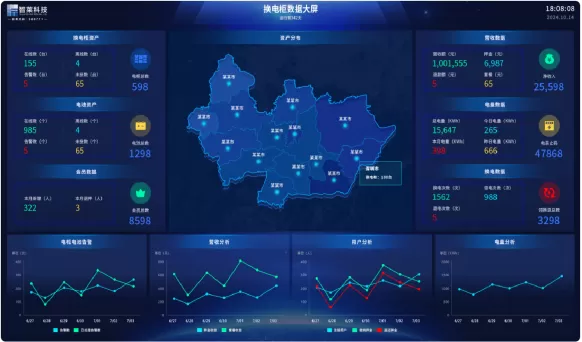
As delivery fleets expand, operators may need to manage hundreds or even thousands of batteries of electric two-wheeler. Traditional tracking methods are often inefficient, making it difficult to monitor the location, usage status, and health condition of each battery. As a result, issues such as battery loss, underutilization, and excessive wear can occur, leading to increased operating costs and reduced asset efficiency.
1.3 Infrastructure Bottlenecks Limit Fleet Expansion
As delivery networks expand, Delivery Fleets operators need to deploy more energy replenishment facilities. However, traditional charging stations require dedicated installation space and often face challenges such as limited power capacity and high electrical upgrade costs. These constraints make it difficult to scale operations quickly, increasing the need for a more flexible and rapidly deployable battery swapping solution.
Zhilai's battery swapping solution consists of four core components: smart battery swapping cabinets, intelligent lithium batteries, a user mobile app, and a cloud-based management platform. Together, these components create a complete ecosystem that integrates battery swapping lockers, batteries, software, and operational management. Riders can locate nearby battery swapping stations, reserve batteries, and complete battery exchanges through the mobile app. The battery swapping cabinet handles battery storage, charging, and swapping, while the intelligent batteries use a Battery Management System (BMS) to monitor battery status in real time. Meanwhile, the cloud platform enables equipment management, battery monitoring, user management, and operational data analysis.
2.1 Fast Battery Swapping in Minutes
Featuring 20A fast charging technology, batteries can be fully charged in as little as one hour, with a charging efficiency of up to 95%. Compared with conventional charging methods, riders no longer need to wait for E-bike batteries to recharge. Instead, they can simply replace a depleted battery with a fully charged one at a nearby battery swapping cabinet and immediately return to work.
2.2 Intelligent Battery Management Improves Asset Utilization
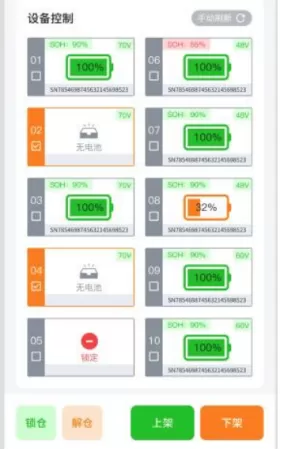
Through the integration of the Battery Management System (BMS) and cloud platform, operators can monitor the entire lifecycle of every battery in real time. Key battery data, including charge level, temperature, charge-discharge cycles, and overall health status, can be accessed at any time. By analyzing this data, the system can optimize charging strategies, prevent overcharging and deep discharging, and reduce abnormal battery usage, ultimately extending battery lifespan and maximizing asset utilization.
2.3 SaaS Platform Enables Centralized Operations
The cloud-based SaaS platform allows operators to monitor the status of all battery swapping cabinets and batteries in real time, manage rider accounts and access permissions, and track key operational metrics such as battery swaps, orders, and revenue. When equipment malfunctions, battery abnormalities, or inventory shortages occur, the system automatically generates alerts, enabling maintenance teams to respond quickly. In addition, comprehensive analytics and reporting tools help operators optimize station deployment, resource allocation, and business expansion strategies, resulting in more efficient and intelligent operations.
3.1 Focus on Battery Compatibility and Scalability
Battery compatibility and scalability are critical factors when selecting a battery swapping solution. Zhilai's battery swapping cabinets are compatible with more than 80% of battery models on the market, providing greater operational flexibility and supporting future business growth. In addition, the modular design and scalable architecture help reduce long-term maintenance and upgrade costs.
3.2 Prioritize Safety and Reliability
For delivery fleets that operate around the clock, safety and reliability are essential. The system supports both aerosol fire suppression and water-based fire protection technologies to enhance operational safety. In addition, its intelligent temperature control system enables stable operation in environments ranging from -20°C to 50°C, ensuring continuous and reliable battery swapping services under various weather conditions.
4.1 Lower Labor Costs Through Automation
By automating battery charging, swapping, and tracking processes, battery swapping systems reduce manual intervention and improve operational efficiency. This allows operators to manage larger fleets with fewer personnel.
4.2 Extend Battery Lifespan
Intelligent battery management systems continuously monitor battery health and optimize charging strategies, helping prevent overcharging and excessive discharge. This extends battery lifespan and reduces replacement costs.
4.3 Achieve Higher ROI for Delivery Fleets
Reduced downtime, higher vehicle utilization, and improved delivery capacity all contribute to a faster return on investment. For fleet operators, battery swapping not only improves operational efficiency but also creates long-term financial benefits.
Battery swapping is becoming an essential part of the electric mobility ecosystem, especially for delivery fleets that rely on continuous vehicle availability. A well-designed battery swapping solution can significantly improve operational efficiency, reduce energy management challenges, and support large-scale fleet deployment.
Whether you operate a food delivery service, quick commerce platform, or last-mile logistics network, choosing the right battery swapping partner can help you maximize fleet performance and accelerate business growth. As battery swapping technology continues to evolve, businesses that adopt this model early will be better positioned to meet the growing demands of modern urban delivery services.
Looking for a reliable battery swapping solution for your delivery fleet? Contact us to learn how our smart battery swapping system can support your business goals.