A polished quotation can tell you what a supplier wants to sell. It tells you less about what will happen when the product enters production, needs to connect with existing software or develops a fault after installation.
That is why choosing a reliable smart locker manufacturer involves more than comparing prices and specifications. Commercial buyers also need to evaluate the company behind the equipment, its manufacturing process, engineering capabilities and approach to long-term support.
The following checks can help procurement teams make a more informed decision.
Start with information that can be independently checked. A legitimate supplier should publish its registered company name, headquarters, contact details and business history. These details provide a basic record for due diligence and make it easier to confirm who will be responsible for the contract.
SHENZHEN ZHILAI SCI AND TECH CO., LTD. was founded in 1999 and listed on China’s A-share Growth Enterprise Market in 2019 under stock code 300771. The company focuses on the research, development, manufacturing, sales and service of smart storage and delivery equipment.
A long operating history does not mean that every product will fit every project. It does, however, give buyers more evidence to examine than a recently created sales website with limited company information.

A sample demonstrates what a supplier can produce once. A commercial order depends on whether the same materials, assembly standards and testing procedures can be maintained across an entire production run.
Questions to Ask Before Choosing a Smart Locker Manufacturer
Where will the equipment be manufactured?
How are incoming materials inspected?
What checks are completed before shipment?
How are hardware and software revisions recorded?
Can the supplier maintain the same specification for repeat orders?
ZHILAI operates production bases in Xianning, Hubei, China, and Binh Duong, Vietnam. Its published quality information states that manufacturing follows the ISO 9001 quality management system.
For buyers, these facts are a starting point for more detailed conversations about production schedules, inspection records and quality responsibilities. They are more useful when connected to a specific order rather than presented as general factory claims.
A smart locker is not simply a cabinet fitted with electronic locks. Depending on the application, the system may also include a touchscreen, access control, temperature management, payment hardware, remote monitoring and software connections.
These components must work together after the equipment leaves the factory. A reliable smart locker manufacturer should be able to explain how the mechanical structure, electronics and operating workflow are coordinated.
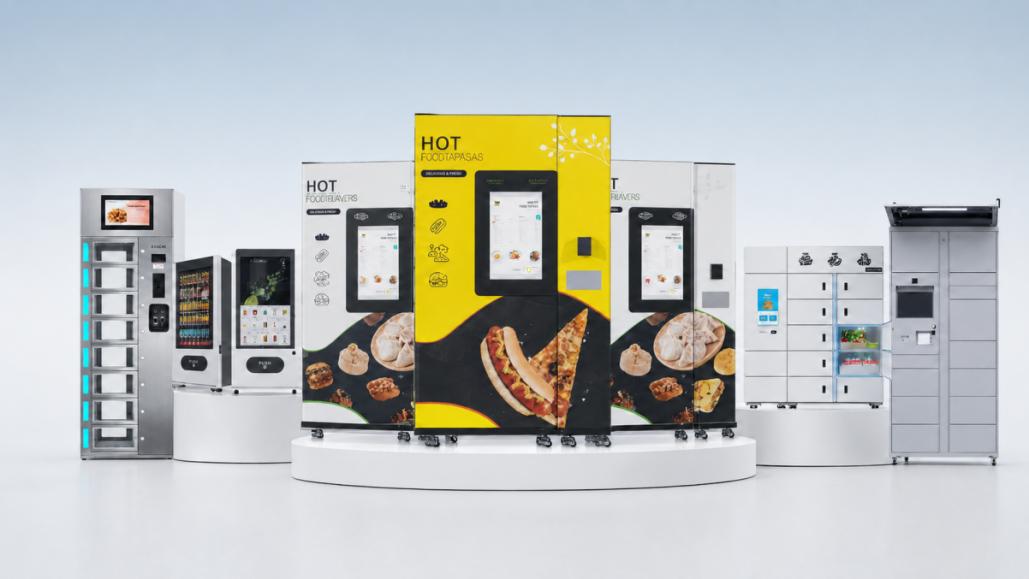
ZHILAI develops several types of commercial automated equipment, including:
Parcel and delivery lockers
Food pickup and temperature-controlled lockers
Smart vending machines
Storage and asset-management lockers
Charging and battery-swapping cabinets
Medical storage and dispensing solutions
Experience across different applications can be useful when a project combines hardware, software and environmental requirements. Buyers should still evaluate the supplier’s experience with their particular use case instead of assuming that every locker project is the same.
“Customizable” is one of the most common terms in equipment sales, but its meaning varies widely. It might refer only to exterior colors and logos, or it could involve changes to compartment sizes, electronics and software.
A requirement document should identify the details that matter to the project, such as:
Overall dimensions and compartment layout
Cabinet materials and installation environment
Indoor or outdoor operation
Ambient, heated, refrigerated or frozen storage
Access and identity-verification methods
Local voltage and electrical standards
Payment methods and settlement systems
User-interface language and branding
API or third-party software requirements
ZHILAI provides OEM and ODM support for project-specific requirements. However, any requested change still needs to be assessed for technical feasibility, cost and production time.
A trustworthy supplier will not agree to every request without discussion. It should identify which features are standard, which require development and which could create practical trade-offs.
After-sales support should be discussed before production begins, not after a problem occurs. Buyers need to know who will handle installation questions, technical diagnosis, spare parts and warranty claims.
ZHILAI’s published after-sales service policy includes a one-year warranty beginning from the acceptance date. Project-specific coverage and response arrangements should still be confirmed in the sales contract.
For international or multi-location projects, procurement teams should ask:
Who provides first-line technical support?
Which issues can be diagnosed remotely?
Are operating manuals and training materials included?
How are replacement parts identified and ordered?
What information is required when reporting a fault?
How are software updates and configuration changes managed?
The answers help buyers understand the likely operating workload and total cost beyond the initial equipment price.
Pay Attention to Communication Quality
Trust is also built during the quotation and technical review process.
Does the supplier ask detailed questions about the application?
Are revised specifications documented?
Can the sales and engineering teams explain why a proposed configuration is suitable?
Are limitations discussed clearly?
Consistent communication reduces the risk of assumptions being carried into production. It also shows whether the supplier treats the project as a standard product sale or as an operating system that needs to work in a real environment.
No single certificate, factory photograph or product demonstration can establish brand trust on its own. Confidence develops when company information, technical specifications and project responsibilities remain consistent from the first discussion through production and after-sales service.
For businesses evaluating ZHILAI smart locker and vending solutions, a useful first step is to prepare the intended application, location, capacity, workflow, software requirements and local standards.
This gives both the buyer and manufacturer a practical basis for evaluating the proposed solution. More importantly, it helps determine whether the supplier is prepared not only to deliver the equipment, but also to support a commercial deployment over the long term.