For a delivery fleet, the battery decision is really a time-management decision. By returning to a depot for long, predictable breaks, charging can be affordable and easy for motorcycles. The longer shifts people work, or the more orders they get during their lunches and dinners, the more appealing battery swapping becomes, especially since a parked bike means a missed order.
That's why there's never a clear winner in the battery swap vs charging debate. For a small fleet with overnight downtime, charging may be more cost-effective. If a fleet has many miles on its vehicles and runs more than one shift a day, the added cost of a swapping system could be offset by increased vehicle availability. The right choice depends on duty cycle, route density, battery compatibility, site power, and the value of each hour on the road.
For heavily used electric two-wheelers, swapping often fits better because riders exchange a depleted pack and return to work. Charging is often more economical for lower-mileage fleets that can recharge off-hours.
Decision factor | Charging | Battery swapping |
Best fit | Predictable routes and long depot stops | High-mileage, multi-shift work. |
Downtime | The battery stays with the vehicle while it charges | The Rider exchanges the battery and leaves. |
Infrastructure | Chargers, parking and sufficient site power | Swap cabinets, compatible packs and spare inventory |
Main advantage | Simpler setup and lower entry cost | Faster turnaround and higher availability |
Main constraint | Charging time and parking demand | Compatibility and network planning |
With direct charging, the battery stays in the motorcycle or is removed and connected to a charger. The fleet will need to arrange charging times and ensure that vehicles or batteries are stored in a secure location. This works well overnight or between shifts.
A battery swapping system separates rider turnaround from battery charging. The rider returns a depleted pack, picks up a fully charged one, and rides away. Meanwhile, the battery swapping cabinet recharges and monitors the returned battery for the next user, keeping the motorcycle on the road while charging continues in the background.
1. Utilization and the cost of downtime
Don't start with the hardware; start with the route. How many hours does each motorcycle run? How much is a bike that's not available worth at peak hours?
If one overnight charge covers the route, swapping may add complexity without much value. Riders can benefit from productive hours saved when using it during a shift if required, particularly if the vehicle is used for multiple shifts.
2. Route density and site access
Swapping saves time only when charged batteries are available near the route. Dense delivery zones, courier hubs, and logistics transfer points are natural locations, as many riders pass through a small area.
If the routes consist of single or multiple vehicles that make the entire journey to a single depot at night, private charging could be simpler. Locating a cabinet is as important as swap speed, since a misplaced cabinet can turn a quick exchange into a detour. Battery availability is another critical factor.
3. Upfront cost and total cost of ownership
Charging normally is easy to begin and may be expanded gradually. Swapping requires cabinets, compatible batteries, software and enough battery inventory to cover demand while depleted packs recharge.
Include rider downtime, spare vehicles, battery replacement, maintenance, electricity and asset utilization. An ICCT analysis of electric two-wheelers in India found point charging cheaper in its last-mile case, while swapping performed better for ride-hailing. Results depend heavily on mileage, service fees and operating assumptions.
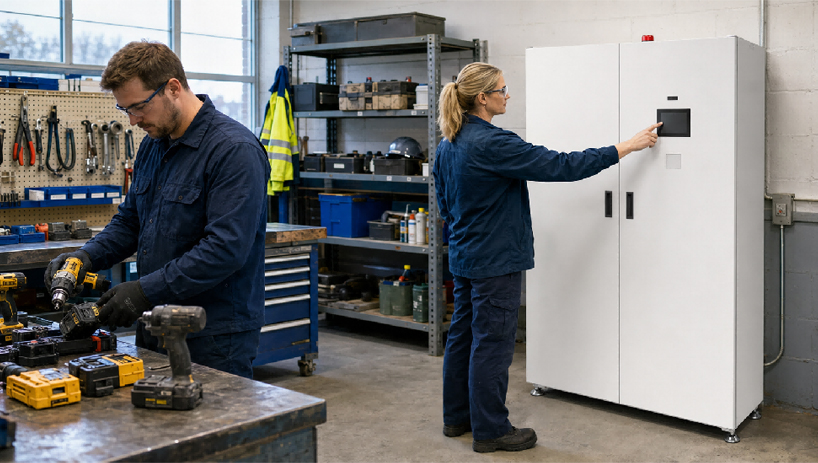
Figure 1. Charging Cabinet for Centralized Power Tool Charging and RFID Management.
4. Battery compatibility
Charging is usually more flexible because the vehicle uses its approved battery and charger. By contrast,Swapping needs a tighter match across pack dimensions, voltage, connector, communication protocol, lock and vehicle interface.
A supported voltage does not mean every pack will fit. Test the actual battery and vehicle before deployment; fewer formats make inventory and maintenance easier.
5. Safety and operational control
Both models need compatible charging equipment, electrical protection, temperature monitoring, suitable fire response and clear procedures.
A swap system concentrates charging and monitoring in managed cabinets, giving operators a clearer view of battery condition. It also increases responsibility for cabinet maintenance, alarms and inspection. A well-run depot can offer similar control; scattered charging is harder to supervise.
Direct charging suits motorcycles that finish routes with reserve and return to a controlled depot with enough downtime. It also fits small fleets and pilots with adequate power and parking. Under these conditions, it may offer the lowest cost per kilometre.
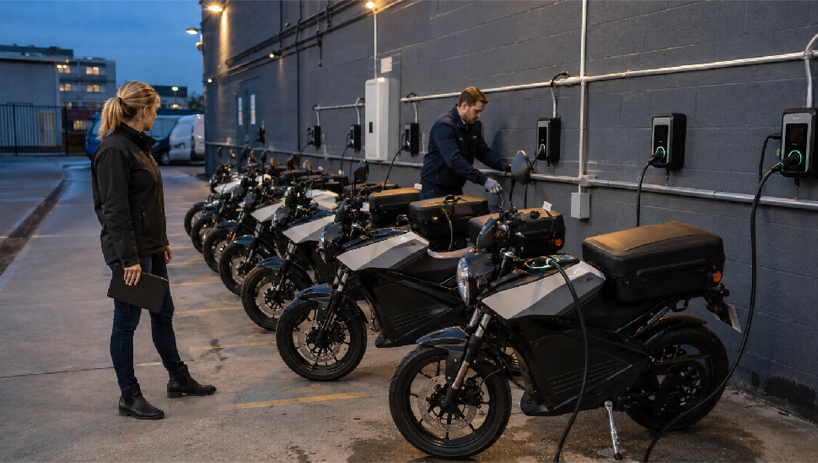
Figure 2. delivery fleet overnight charging.
Consider swapping in the following situations: long rides, peak times of the day (before and after lunch), and between riders who are moving from one to another with minimal downtime. It is ideal for use with standardized batteries and cabinets at active hubs. The most important factor is productive time lost during charging. Removal will increase deliveries or assist with another shift with fewer systems, and swapping has a stronger argument.
ZHILAI's battery swapping cabinet is designed for electric two-wheeler operations in logistics, express delivery, food delivery and related services. The Linux-based Type-C model is available with five or ten battery compartments.
The five- and ten-compartment versions measure W545 × H1745 × D591.4 mm and W980 × H1745 × D591.4 mm, respectively. Each compartment provides 260 × 185 × 380 mm of clear space. The cabinet has an IP54 rating and will operate between -20°C and 55°C. It supports 36V, 48V, 60V and 72V battery systems, subject to pack-level compatibility validation.
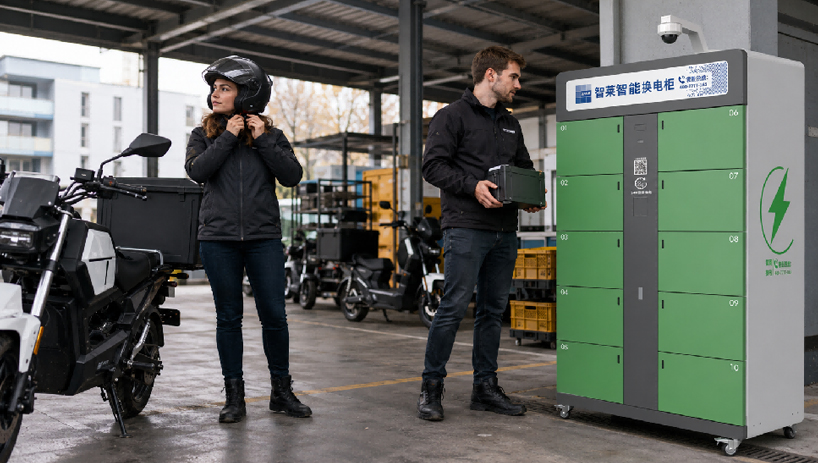
Figure 3. type-C battery swapping operation.
Functions include charging status indication, monitoring, anti-theft, and electrical protection against overload, overcurrent, leakage, short circuit, overvoltage, and undervoltage. The specified fire-response design uses aerosol protection for the cabinet body and water-based protection for the battery compartments. Site assessment and local compliance checks are still required.
Our guide to battery swapping solutions explains the supporting battery, app and management-platform workflow in more detail.
ZHILAI's Type-A smart charging locker is not a direct charging alternative for electric delivery motorcycles. It is designed for centralized charging, storage and RFID-based management of power tools and tool batteries in factories, maintenance workshops and equipment centers.
It has 30 storage positions, a 10.1-inch touchscreen, Android 11, face and card verification, RFID inventory, 4G/Wi-Fi and charging-status indicators. It should not be marketed for e-bike traction batteries unless a separate model is engineered and validated for that purpose.
For delivery fleets, battery swapping vs charging is a choice between operating models. Use charging when routes fit within daily range, and vehicles have predictable downtime. Consider swapping when uptime has measurable value, and the fleet can standardize batteries across a well-planned network. Compare both against real-world route data, battery specifications, site power, and the cost of idle time.
For the rider, yes. A short exchange replaces the recharge wait; the returned pack then charges for another user.
No. Swapping adds cabinets, spare batteries and network operations. Charging may cost less when mileage is lower and overnight stops are long.
No. Pack dimensions, voltage, connector, communication protocol, charging requirements and vehicle interface must all be validated.
Start with high-frequency riders, compatible batteries, safe smart cabinets, convenient locations, and practical pricing. Test with a small pilot before scaling. Learn more