As the global transition toward electric mobility accelerates, one challenge continues to limit adoption: charging time. This is where the battery swapping station emerges as a transformative solution.
Instead of waiting hours to recharge, users can swap a depleted battery for a fully charged one in minutes. For electric motorcycle battery swap systems, this technology is reshaping urban mobility, logistics, and energy infrastructure.
This guide provides a comprehensive, user-first exploration of battery swapping technology, covering how it works, design considerations, benefits, real-world applications, and why solutions like ZHILAI stand out in the market.
A battery swapping station is an automated or semi-automated facility where electric vehicle users can exchange a depleted battery for a fully charged one.
Unlike conventional charging stations, electric battery swapping station:
Eliminate long charging times
Standardize battery modules
Enable continuous vehicle operation
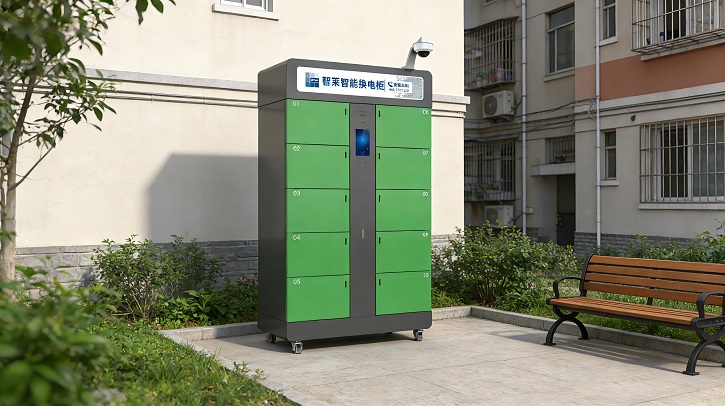
The battery swapping process is designed for speed, safety, and simplicity.
User Authentication
Via mobile app, QR code, or RFID
Battery Verification
System checks battery compatibility and health
Battery Removal
User or robotic system removes depleted battery
Battery Insertion
Fully charged battery is released from the station
Data Sync
System logs battery usage, billing, and diagnostics
Charging Cycle
Returned battery is charged for future use
| Component | Function |
|---|---|
| Battery Modules | Standardized, swappable energy units |
| Smart Lockers | Secure storage and access control |
| Battery Management System (BMS) | Monitors battery health and safety |
| Cloud Platform | Tracks usage, billing, and analytics |
| User Interface | App or touchscreen for interaction |
Effective battery swapping station design is critical for scalability, safety, and user experience.
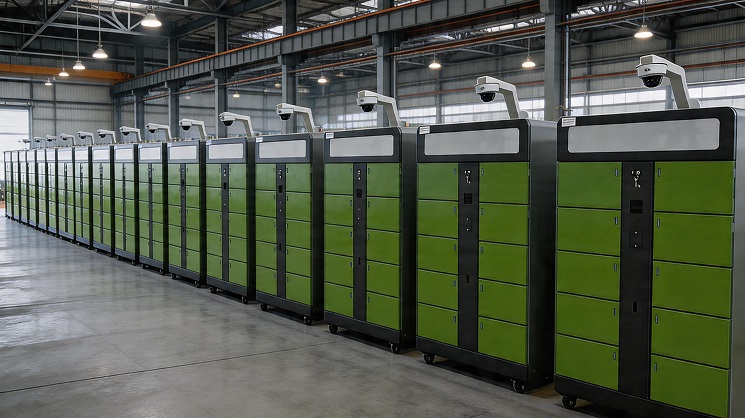
Modularity: Easily expandable locker units
Compact Footprint: Ideal for dense urban areas
Thermal Management: Prevent overheating
Security: Anti-theft and access control
User-Friendly Interface: Minimal learning curve
| Design Factor | Traditional Charging | Battery Swapping Station |
|---|---|---|
| Time per operation | 2–8 hours | 1–3 minutes |
| Space efficiency | Moderate | High |
| User convenience | Medium | Very High |
| Scalability | Limited | Highly scalable |
| Grid dependency | High | Optimized load balancing |
Swapping takes minutes, making it ideal for commercial fleets.
No waiting = more productivity.
Users can adopt battery-as-a-service (BaaS) models.
Centralized charging improves battery longevity.
Stations can charge batteries during off-peak hours.
Encourages industry-wide battery compatibility.
When evaluating smart locker manufacturers, ZHILAI offers several competitive advantages:
ZHILAI integrates intelligent lockers with real-time monitoring and secure access systems.
Stations can be scaled based on demand, making them suitable for both startups and large fleets.
Cloud-based management enables:
Real-time battery tracking
Predictive maintenance
Usage analytics
Temperature monitoring
Fire protection systems
Battery health diagnostics
Fast, intuitive, and reliable swapping process designed for minimal friction.
How to Change the Battery in a Swapping Station?
Access the locker via a mobile app, QR code, or RFID card. Open the compartment, remove the depleted battery, and replace it with a fully charged one. The system automatically updates inventory and battery status.
What is the Battery Swapping Process?
The battery swapping process involves authentication, removing the old battery, placing it in a charging slot, and retrieving a fully charged battery. This workflow ensures efficiency, safety, and convenience.
What Are the Advantages of Battery Swapping Cabinet?
Provides instant access to fully charged batteries
Reduces charging wait times
Enhances fleet and individual operational efficiency
Supports environmentally friendly energy management
Offers scalable, secure infrastructure
The battery swapping station is no longer a niche innovation—it is a critical infrastructure component for the future of electric mobility.
With applications in electric motorcycle battery swap systems, this battery swapping technology addresses one of the biggest challenges: time.
Companies like ZHILAI are pushing the boundaries with smart, scalable, and user-centric solutions, positioning battery swapping as a cornerstone of next-generation transportation.