For commercial electric motorbike (EV) fleet operators, property management companies, industrial park administrators, and delivery service providers, procuring the right battery swapping cabinet is one of the most critical decisions in EV operation management. A high-quality, suitable battery swapping cabinet can not only improve operational efficiency and reduce maintenance costs but also effectively eliminate potential safety hazards caused by non-standard charging. On the contrary, a poor-quality or unsuitable product may lead to frequent equipment failures, increased operational risks, and even serious safety accidents such as battery fires.
However, many business owners and procurement personnel lack professional knowledge of battery swapping equipment, and often fall into the trap of only looking at the price or blindly following the trend when purchasing, resulting in the purchased equipment not meeting the actual use needs. This guide will combine Zhilai’s years of industry experience in smart charging equipment manufacturing to detail the core factors that commercial buyers must consider when purchasing battery swapping cabinets, common pitfalls to avoid, and how to choose the most suitable product for your business.
Before purchasing, you must first clarify the type of battery swapping cabinet suitable for your business scenario. At present, the mainstream commercial battery swapping cabinets on the market can be divided into three categories, each with its own applicable scenarios:
1. Standard battery swapping cabinets: This is the most mainstream product on the market, with a fixed number of compartments, standardized functions, and universal battery adaptation. It is suitable for general commercial scenarios with stable demand, such as residential communities, small and medium-sized delivery stations, office parks, and shopping malls. The advantages of standard cabinets are low price, short delivery cycle, and quick deployment, which can meet the basic battery swap needs of most commercial users.
2. Customized battery swap cabinets: This type of product is designed and manufactured according to the specific needs of the buyer, including customized size, function, appearance, and battery adaptation. It is suitable for scenarios with special site conditions, high-frequency use, personalized functional requirements, or brand image needs, such as large chain delivery brands, shared EV operators, urban core business districts, and special industrial scenarios. The advantages of customized cabinets are high adaptability, perfect matching with business needs, and high long-term utilization rate.
3. Explosion-proof battery swap cabinets: This type of swap station has higher safety performance, meets national explosion-proof electrical standards, and is equipped with more professional fire protection and explosion-proof systems. It is suitable for high-safety requirement scenarios such as industrial parks, warehouses, chemical plants, and mining areas, where the use of ordinary standard cabinets may have potential safety hazards.
After clarifying the applicable product type, you need to focus on the following 7 core factors when selecting specific products and suppliers, which directly determine the safety, stability, and cost-effectiveness of the equipment:
Safety performance (the top priority):
For commercial battery swap equipment, safety is always the first factor to consider. You must focus on checking:
1. Protection level: At least IP54 or above for indoor and outdoor general scenarios, and IP65 or above for harsh outdoor or industrial scenarios.
2. Fire protection system: It is best to have a dual fire protection system for the cabinet body and battery compartment, such as aerosol + water-based fire suppression, which can quickly extinguish the fire in the early stage of battery thermal runaway.
3. Electrical protection: It must have full-link protection functions including overload, overcurrent, leakage, short circuit, overvoltage, and undervoltage protection to avoid safety accidents caused by electrical failures.
4. Safety certification: Check whether the product has passed national industry safety tests and obtained relevant compliance certifications.
Battery and scene adaptation ability
The purchased equipment must be perfectly adapted to your actual use needs:
1. Battery adaptation: Check whether the cabinet supports the voltage and model of the battery pack used in your fleet. The mainstream commercial cabinets on the market support 36V/48V/60V/72V full-voltage adaptation, which can meet the needs of most two/three-wheeler EVs.
2. Site adaptation: Measure the size of the installation site in advance, and check whether the cabinet size can be placed smoothly, especially for narrow spaces such as subway entrances and street corners, you need to pay special attention to the width and depth of the cabinet.
3. Usage frequency adaptation: For high-frequency use scenarios such as food delivery stations, you need to choose a cabinet with a larger number of compartments, faster charging speed, and higher structural strength to avoid equipment damage caused by frequent use.
Intelligent management functions
The intelligent functions of the cabinet directly affect your later operation and maintenance costs. The core intelligent functions you need to pay attention to include:
1. Real-time status monitoring: Can you remotely view the charging status, battery level, and operating status of each compartment in real time through the background system?
2. Fault alarm and self-repair: Can the cabinet automatically send an alarm when a fault occurs, and even realize automatic fault reset and repair, reducing the need for on-site manual maintenance?
3. Access control and anti-theft: Does it have functions such as face recognition, ID card verification, or scanning code access to prevent unauthorized use and battery theft?
4. Data statistics and analysis: Can the background system count the usage frequency, energy consumption, and fault data of the cabinet, providing data support for your later operation optimization?
Manufacturer’s production capacity and quality control system
The strength of the manufacturer directly determines the quality and stability of the product. You need to check:
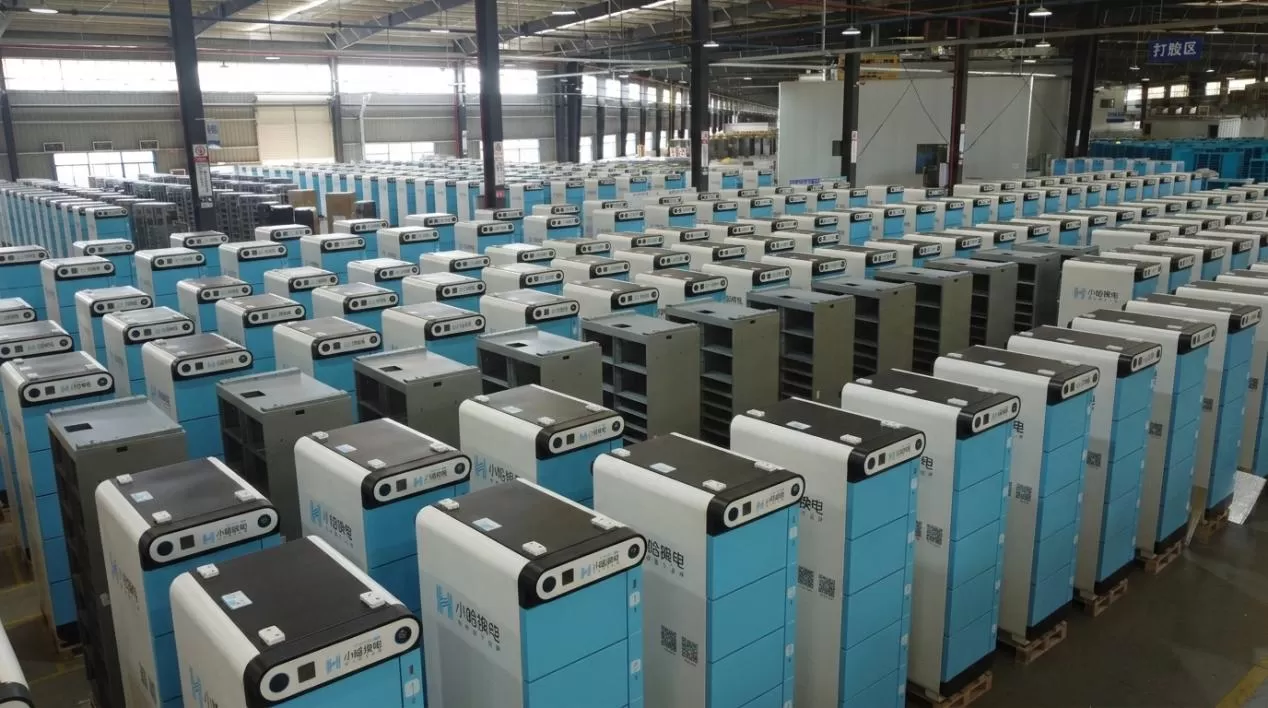
1. Does the manufacturer have its own standardized production base and professional production equipment? Avoid choosing small workshop-style manufacturers with unstable product quality.
2. Does the manufacturer have a complete quality control system? For example, does each product undergo 100% full inspection before delivery, and does it have a professional laboratory for product performance and safety testing?
3. Does the manufacturer have rich industry experience and a large number of successful commercial cases? Battery swapping companies with more experience can better understand the needs of commercial users and provide more suitable products and solutions.
After-sales service and operation support
For commercial equipment, perfect after-sales service is crucial to ensure long-term stable operation. You need to confirm with the supplier:
1. Do they provide door-to-door installation and commissioning services? For large-scale batch procurement, do they provide on-site operation and maintenance training for your personnel?
2. What is the after-sales response time? For commercial scenarios with high demand for continuous operation, you need to choose a supplier that can provide 7*24 hour technical support and has a fast emergency response mechanism.
3. Do they have a complete spare parts supply system? Can they quickly provide replacement parts when the equipment fails, avoiding long-term equipment shutdown?
4. What is the warranty period of the product? The mainstream commercial swap battery stations on the market have a warranty period of 1-2 years, and some high-quality manufacturers can provide longer warranty periods for core components.
Total cost of ownership (TCO)
When purchasing, you should not only look at the one-time procurement price, but also calculate the total cost of ownership during the entire service life of the equipment. A product with a slightly higher procurement price but better quality, lower failure rate, and lower maintenance cost may have a much lower total cost of ownership in the long run than a cheap product with frequent failures. You need to comprehensively consider the procurement cost, installation cost, maintenance cost, spare parts cost, and even the potential loss caused by equipment shutdown and safety accidents.
Scalability and compatibility
For commercial users with long-term development plans, you need to consider the scalability of the equipment. For example, can the cabinet be expanded in the later stage according to the increase of your fleet size? Can the intelligent management system of the cabinet be compatible with your existing operation management system, payment system, and scheduling system? Choosing a product with good scalability and compatibility can avoid the need for overall replacement of equipment in the later stage, saving a lot of procurement costs.
Combined with our years of industry experience, we have summarized the 5 most common pitfalls that commercial buyers often fall into when purchasing battery swapping cabinets, which you must pay special attention to:
Only looking at the price, ignoring safety performance and quality
This is the most common mistake. Many buyers only compare the unit price of the product when purchasing, and choose the cheapest product, ignoring the safety performance, quality control, and after-sales service of the product. These cheap products often cut corners on materials and safety configurations, which are very prone to safety accidents such as battery fires and electrical failures in later use, and the maintenance cost is also very high, which is not worth the loss.
Ignoring the actual usage scenario, blindly purchasing standard products
Many buyers do not conduct in-depth analysis of their own usage scenarios, and directly purchase the most common standard products on the market. As a result, the purchased equipment cannot adapt to the site size, usage frequency, or functional requirements, resulting in low equipment utilization, frequent failures, and even inability to be used normally.
Over-pursuing complex functions, ignoring practicality
Some buyers blindly pursue products with various complex intelligent functions when purchasing, without considering whether these functions are really needed in their actual operation. These complex functions not only increase the procurement cost, but also may lead to higher failure rate and more complex operation and maintenance, which is counterproductive.
Ignoring the manufacturer’s after-sales service capability
Many buyers only pay attention to the product itself when purchasing, and ignore the manufacturer’s after-sales service capability. As a result, when the equipment fails in later use, the manufacturer cannot provide timely after-sales support, resulting in long-term equipment shutdown, which seriously affects the normal operation of the business.
Not conducting on-site inspection and sample testing before batch procurement
For large-scale batch procurement projects, many buyers directly sign contracts and place orders only through online communication and product brochures, without conducting on-site inspection of the manufacturer’s production base and sample testing. This may lead to the actual product received being inconsistent with the introduction, with quality problems, and it is difficult to return and exchange the goods after batch procurement, resulting in huge losses.
Zhilai has been focusing on the R&D, manufacturing, and sales of smart charging lockers and swap equipment for many years, and has become a leading supplier in the industry, providing high-quality products and services for thousands of commercial users across the country. Compared with other manufacturers on the market, Zhilai has the following core advantages:
1. Industry-leading safety performance: All our battery swap cabinets are designed with safety as the core, with IP54+ protection level, dual fire protection system, and full-link electrical protection. All products have passed strict industry safety tests, and the cumulative safe operation time in commercial scenarios exceeds 10 million hours, with zero major safety accidents.
2. Full product line coverage: We have a complete product line including standard cabinets, customized cabinets, and explosion-proof cabinets, which can meet the diverse needs of different commercial scenarios. Our standard cabinets support 36V/48V/60V/72V full-voltage battery adaptation, and can be quickly deployed in various general scenarios; our customized cabinets can provide 1v1 tailored solutions according to the specific needs of customers, with a mature customization process and fast delivery cycle.
3. Mature production and quality control system: We have a large-scale standardized production base with professional production equipment and a complete quality control system. Each product undergoes 100% full inspection before delivery, including functional test, safety performance test, and environmental adaptability test, to ensure the consistency and stability of the product. We have an annual production capacity of more than 100,000 units, which can meet the batch procurement needs of large commercial users.
4. Perfect after-sales service system: We provide national door-to-door installation and commissioning services for all commercial orders, and professional operation and maintenance training for customers’ personnel. We have a 7*24 hour after-sales technical support team, with a 4-hour emergency response time in most cities across the country, and a complete spare parts supply system, which can quickly solve various equipment failures for customers and ensure the long-term stable operation of the equipment.
5. Rich industry experience and professional technical team: We have a professional R&D and technical team with many years of industry experience, who can deeply understand the pain points and needs of commercial users, and provide the most suitable products and solutions for customers. We have completed more than 1,000 commercial projects across the country, covering food delivery, shared mobility, property management, industrial parks and other industries, with rich project implementation experience.
If you are planning to procure commercial battery swapping cabinets for your business, but do not know how to choose the most suitable product and solution, or have any questions about the procurement process, you can contact our professional team at any time. We will provide you with free professional procurement advice, on-site survey services, and customized product solutions and quotations according to your actual business needs.
Whether you need a small number of standard cabinets for a community delivery station, or a large-scale customized battery swap solution for a national chain commercial fleet, Zhilai can provide you with the most perfect service and support. Contact us today to start your safe, efficient, and low-cost EV battery swap journey.