

For delivery fleets, logistics companies, and commercial electric two-wheeler operators, battery downtime can quickly become an operational bottleneck. When riders need to wait several hours for charging, vehicles stay idle, delivery capacity drops, and managers have to spend more time coordinating batteries, riders, and routes.
A battery swapping cabinet offers a more efficient way to manage energy replenishment. Instead of waiting for a depleted battery to recharge, riders can return it to a cabinet and collect a fully charged one. For operators, this model supports faster turnaround, safer charging management, and better control over battery assets.
ZHILAI’s new Battery Swapping Cabinet is designed for electric two-wheeler operations that need practical, scalable, and safer battery management.
Electric motorcycles and e-scooters are widely used in food delivery, express delivery, logistics, courier services, campuses, and urban mobility operations. These vehicles often run for long hours, especially during peak service periods. Traditional charging may work for private users, but commercial operators usually need a faster and more organized solution.
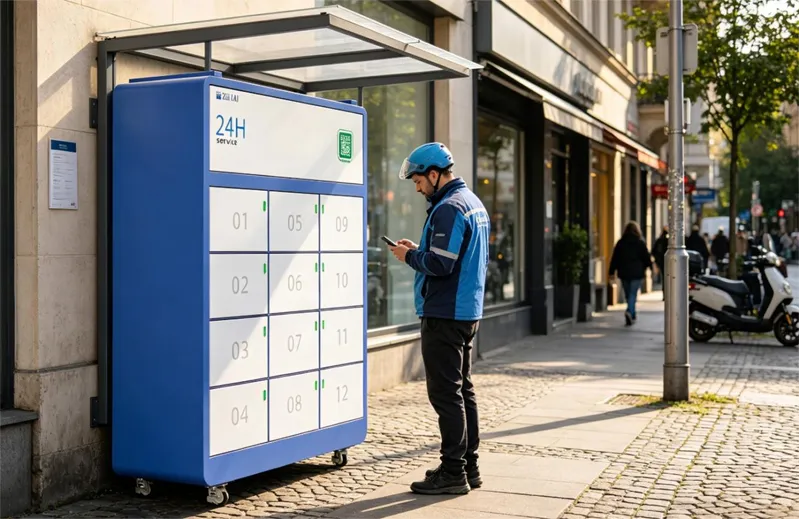
A conventional charging cycle can take hours. For a fleet operator, that time directly affects rider productivity and vehicle utilization. Battery swapping reduces waiting time by giving riders immediate access to charged batteries. This helps keep electric two-wheelers on the road and supports more stable service capacity throughout the day.
In many operating environments, batteries may be charged in shops, dormitories, warehouses, or temporary storage areas. This makes it difficult to monitor battery status, charging behavior, temperature, and potential safety risks. A smart battery swapping cabinet moves charging into a centralized, managed system, helping operators reduce uncontrolled charging and improve day-to-day safety management.
A battery swapping cabinet is a multi-compartment cabinet system used to store, charge, and manage removable lithium batteries. Riders can return a low-power battery and take a fully charged one from the cabinet. At the same time, operators can monitor cabinet status, charging conditions, battery use, and service data through a connected management platform.
For business users, a battery swapping cabinet is more than hardware. It becomes part of a wider battery swapping solution that supports fleet efficiency, asset control, user management, and site-level safety.
Battery swapping helps riders get back to work quickly. This is especially valuable for delivery stations, courier networks, and other high-frequency service points where battery availability affects daily performance.
Cabinet-based charging gives operators a more controlled environment for battery storage and charging. Instead of relying on scattered charging locations, operators can manage batteries through one standardized system.
A reliable battery swapping cabinet should support safety features such as temperature monitoring, electrical protection, water immersion detection, fire suppression, and cabinet status alerts. These functions help operators identify issues earlier and reduce the risks linked to unmanaged lithium battery charging.
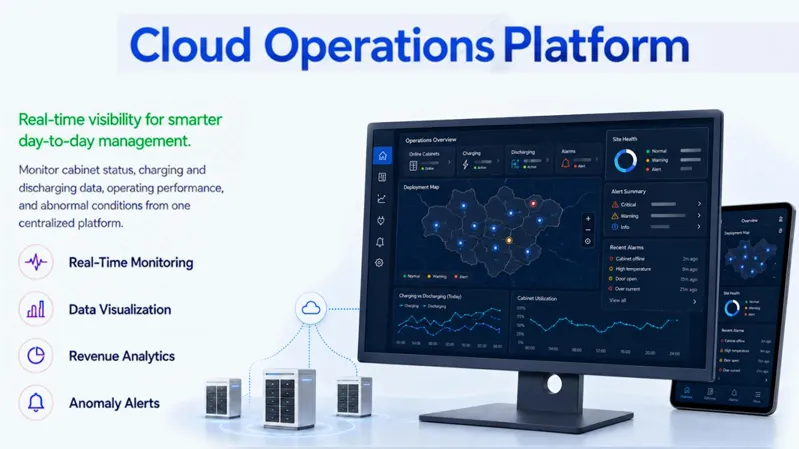
For operators managing multiple sites, remote visibility is essential. Smart battery swapping cabinets can support remote monitoring, exception alerts, charging status visibility, and digital operation records. This helps reduce manual inspection work and improves response speed when an issue occurs.
Battery swapping cabinets are suitable for locations where electric two-wheeler riders gather, start routes, or return during the day. Common deployment scenarios include food delivery stations, express delivery service points, logistics hubs, residential communities, campuses, industrial parks, parking areas, and commercial mobility service sites.
The best deployment location usually depends on rider density, power access, expected daily swap volume, and the operator’s business model. A compact site may need a smaller cabinet, while high-traffic stations may require more compartments to support peak-hour demand.
For business buyers, choosing the right supplier is not only about cabinet size or price. Operators should evaluate whether the solution can match their batteries, vehicles, sites, and operating process.
Before selecting a battery swapping cabinet, operators should confirm battery voltage, battery dimensions, connector type, charging requirements, BMS communication needs, installation environment, IP rating, remote management functions, customization options, and after-sales support.
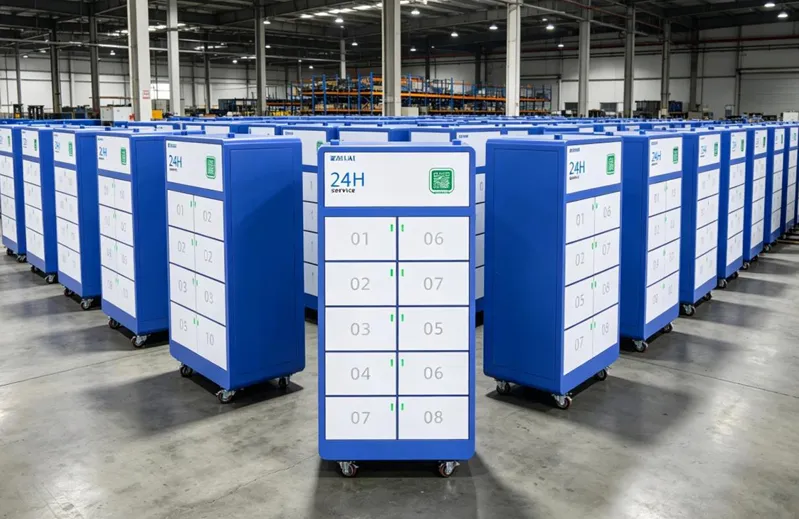
A strong supplier should also understand commercial deployment. This includes site planning, cabinet configuration, safety requirements, payment or membership needs, branding, and long-term operation management.
ZHILAI provides smart charging cabinet and battery swapping cabinet solutions for electric two-wheeler mobility scenarios, including logistics, express delivery, food delivery, postal services, campuses, and commercial service sites.
By combining multi-compartment cabinet design, safety protection, and remote management options, ZHILAI helps operators replace scattered battery charging with safer centralized cabinet management. The solution also supports convenient battery swapping for riders who need quick energy replenishment during daily operation.
For operators building new battery swap stations or upgrading existing charging points, ZHILAI’s Battery Swapping Cabinet provides a practical path toward better battery asset control, improved service efficiency, and safer day-to-day operation.
A battery swapping cabinet is a smart cabinet system that stores, charges, and manages removable lithium batteries. Riders can return a depleted battery and collect a charged one from the cabinet.
Battery swapping cabinets are commonly used by delivery fleets, logistics companies, courier operators, electric motorcycle service providers, campuses, industrial parks, and commercial mobility operators.
For high-frequency commercial operations, battery swapping can reduce charging downtime and help riders stay on the road longer. Traditional charging may still suit private or low-frequency use, but fleet operators often need faster energy replenishment.
Operators should confirm battery voltage, battery size, connector type, charging requirements, site conditions, expected daily swap volume, and remote management needs before choosing a cabinet model.

